Episode Transcript
The COO Roundtable
with Matt Sonnen
Episode 89 – Stephen de Man & Livia Ramirez
00:00:05:05
Luke Sonnen: I'm Luke. Welcome to the county. Powered by Coldstream Wealth Management. Here's your host, Matt Sonnen.
00:00:14:21
Matt Sonnen: Welcome, everyone, to Episode 89. We have a fantastic conversation lined up today, and for the first time this year, I get to welcome guests who spend their days on the other side of the table from where most of our guests sit, rather than being in the seat running operations at an RIA. Today's guests work with RIAs every day through Dimensional Fund Advisors practice management team, which gives them a unique bird's eye view into what separates well-run firms from the rest.
First up is Livia Ramirez, Vice President and Regional Director on Dimensional’s practice management team. Livia is an accomplished leader who has sat in the COO seat at a few different firms prior to joining DFA, and I'll let her go through that in just a minute. Livia and I were both part of Fidelity's operation steering committee many years ago, when we were both COOs at prior firms.
Livia has a track record of helping advisory firms think through business strategy, organizational development and risk management, and her LinkedIn bio states that “she has a methodical approach to continuous improvement for efficient and effective operations through people, process, and technology.” And you all know we love talking people, process and technology on this podcast. So welcome to the podcast, Livia.
00:01:32
Livia Ramirez: Thank you Matt. Looking forward to the conversation today.
00:01:35
Matt Sonnen: Great. And then joining Livia is Stephen de Man, also Vice President and Regional Director at DFA. And he has recently taken over the host duties of Dimensional’s Managing Your Practice podcast. So he knows a thing or two about great practice management conversations. He says he's hoping to learn from us and how we run our podcast, but I think we're going to be learning from Stephen today.
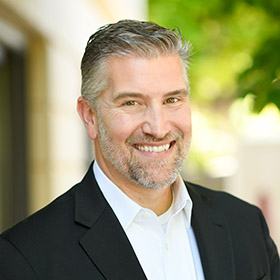
Tapping his immense experience of almost a decade at DFA, Stephen works closely with financial advisors on business strategy, practice management and helping them build successful firms. So, Stephen, welcome to the roundtable.
00:02:14
Stephen de Man: Thanks, Matt. Thanks for having us. I'm really excited. And you do have a great intro announcer in Luke there. So I think that's that might be the thing I want to borrow the most from your podcast.
00:02:24
Matt Sonnen: Yes, that is fun. We love having Luke on there.
Well, together, these two have a front row seat, like I said, to what's working and what's not working across the RIA landscape. So we're going to dive right in. Stephen, I'll start with you. Many of our listeners have attended your practice management symposiums and have been part of some of your roundtables.
But for those that aren't familiar, can you give us an overview of Dimensional’s practice management and consulting division?
00:02:52
Stephen de Man: Yeah. So, many of you may know Dimensional takes a systematic, academic-based approach to investing. Well, we do the same on the practice management side. So it's a very systematic, academic, data-based approach to helping advisors with their business. One strategic decision that happened years ago with Dimensional was to really hitch our wagon to the advisor. So it's embedded in our DNA here to help advisors not just deliver an excellent client experience on the investment side, but really do everything we can from a data side to help them when it comes to running a business.
So our practice management team, there's 17 of us globally - all across the globe from Australia, the UK, U.S. here, representation. And it really is focused on helping advisors use data: use both one of the leading global advisor benchmark type studies. We have an end client global investor study. We have great communities that Livia can speak to really well, but we do a lot of both one-to-one, one-to-few, and one-to-many types of representation for advisors and their business practice.
00:04:05
Matt Sonnen: Yeah, and talking about those communities, Livia, I know DFA offers peer-to-peer study groups for the entire C-suite. Talk to us a little bit about how DFA supports those study groups. And what do you hear from participants? What do they get out of those groups?
00:04:21
Livia Ramirez: Yeah, that's a great question. So, we really support advisors that are wanting to share both the joys and the challenges of being in this business. And through these study groups, what we do is we have advisors - they can share best practices, they can share anything that's even as simple as a vendor recommendation for a particular challenge they're dealing with, talking through what their talent development process looks like, client experience processes.
And we do this all through various different types of study groups. The way we group the advisors together is to try to find firms that are similar in size in terms of AUM or full-time equivalents, and the study groups really meet periodically. Now, the way we support the study groups are a couple of different ways. We do have a dedicated communities team that can provide an experience that sometimes it's just for an hour, sometimes it's a full day experience.
And for some study groups, it's a multi-day experience. And then the study groups also can be supported directly by the sales relationship manager. At the end of the day, the way practice management engages with the study groups is that oftentimes, we'll come in to give a presentation around best practices around a variety of topics such as client experience, growth.
And of course, having just released the results from the Global Advisor study, we’ll talk a lot about what high-performing firms are doing really well.
00:05:46
Matt Sonnen: Great. Well, Stephen, I mentioned that you've been at DFA for a decade, but you started out in education and you were involved with Teach for America. So, walk us through that career path. You went from middle school teacher to hosting a practice management podcast for RIAs.
00:06:03
Stephen de Man: Yeah, the path definitely makes more sense in hindsight than it does in real time there. But no, it's you know, it's interesting. I always wear a little bit of my teacher hat. I was with Teach for America for eight years and both – obviously, teaching middle schoolers, but then in the administration side. And the administrative side that I worked on was all human capital-based, and it was all with former McKinsey partners.
So it was a very analytical, very data-driven side of operating there, which was a great, great place to cut my teeth. But, you know, when I think about the skills of having gone from middle school teacher to now practice management, here, you learn quickly working with middle schoolers especially, that knowledge isn't the same as understanding, right? And we're all wired differently. We all learn different ways. And so you can have the best content in the world. But if people aren't connecting to it or know how to apply it or even remember it, it really doesn't matter. And so I try to bring - and all of us at Dimensional when it comes to practice management - bring that educator hat into our role.
Oftentimes it's just: here's what the data are showing us. You know, we don't want to be too prescriptive with a firm and tell a firm, like, this is what you need to be doing or not doing. We really respect the role that the advisor plays and the firm principal plays. So oftentimes they're just helping to translate that and helping to connect with how other firms are interpreting the data.
So yeah, always wear a little bit of the teacher hat, educator hat. But it's now ten years at Dimensional. I've really enjoyed the advisor community we get to serve and work with.
00:07:44
Matt Sonnen: I know in a little bit we're going to be talking about AI, of course. And I think in this world of AI, I love your quote: “knowledge isn't the same as understanding,” because I think we all are dealing with that right now in our in our industry.
Well, Livia, I mentioned you've had an incredibly impressive career in wealth management operations. You've had two separate stints at Alliance Bernstein. I mentioned you sat in the CO seat at an RIA. So walk us through your career path.
00:08:13
Livia Ramirez: Thanks, Matt. Yeah, it's been an interesting career path. But I would say fundamentally, it goes back to my first principles and my first role at Alliance Bernstein in the Management Consulting group. So by that I mean that at my core, regardless of what my functional title has been, I am a Management Consultant in terms of thinking about things being faster, cheaper, better through people, process, and technology.
So using that methodology and that mindset, I was at AB the first time around in the Management Consulting group, transitioned into the Legal and Compliance department as -working really on a lot of strategic initiatives that included a tech stack of the organization and really thinking through how the compliance processes were being done. Transitioned to an RIA that grew from $250 million to just shy of $1 billion in seven years, all organic growth, and then rejoined Alliance Bernstein when they were relocating their headquarters from New York to Nashville.
As - you know, the CEO for the Legal and Compliance department, not as a legal and compliance professional, but really as someone who understands how to build a functional, highly efficient, highly effective team. And then also just part of the senior leadership of relocating the headquarters of a global organization.
But at the end of the day, you know, what we have is a - we have a client at DFA that senses says this the best is that - what we're trying to do is get clients, keep clients; get employees and keep employees. So having worked at a firm of 15, and a firm of 4600, that's still very true – it’s just a difference of scale.
00:09:55
Matt Sonnen: Yeah. Well, you both talked about - you're working with firms of all shapes and sizes. So Livia, let me start with strategic planning. When it comes to annual strategic planning, what do you see that separates the firms that actually execute against their plan from the ones that - they might take the time to write the plan? But a lot of times that plan just sort of sits in the drawer all year long.
So what is what is great look like from a from your seat with annual strategic planning?
00:10:25
Livia Ramirez: Matt. Truer words have not been spoken with respect to creating a plan and then just having it sit in a drawer. So, what we see - firms that are really doing this and executing it on it really well is that they have accountability with a periodic review and that accountability is with the team. So being very public about what you were trying to accomplish, when you want to accomplish it, by having those milestones, and then holding yourself accountable to the team to be able to execute on those milestones.
One of the things that we see firms do really well is we had a colleague on our team create this framework: we call it the SEAR framework. So: strategy, education, activity, and resources. And really bucket what that plan looks like around those four items. So, as an example, if someone has a strategy of wanting to add client referral discussions to a meeting, the education piece of it would be what you want to make sure that you have a target client profile.
The activities around it would be that you want to make sure you're identifying your current client - you know, your current top-tier clients - that you're having X number of conversations by X number of date, and then thinking about the resources that you're going to need, whether it's you're needing to create documentation or you're needing to define the client referral process.
And for each one of those steps, having a dedicated deadline is really where we see firms really holding themselves accountable to that or executing quite well on that.
00:11:56
Matt Sonnen: The Seer framework tell me once it was SEAR - what's the acronym?
00:12:01
Livia Ramirez: So for strategy, education, activity and resources.
00:12:06
Matt Sonnen: I like it, I like it a lot. Okay, great.
Well, Stephen, from your experience working with advisors of all different shapes and sizes, where do you see firms falling short when it comes to turning a strategic plan into actual results?
00:12:21
Stephen de Man: Yeah, I think Livia nailed it, where one of the other things we see is just having too many priorities. You know, if you take the counterfactual of like, knowing what not to do, I think a lot of firms - when we're having those conversations of: tell us about your operational challenges, tell us about your growth challenges - we give a long list to choose from, and pretty much it's a wish list of different things they wish they could effectuate and change.
So, we find how can you narrow that down in scope so that you're really focusing on highest and best use of what to focus on. And then I think Livia nailed it with the ownership and cadence for the accountability piece, like having multiple - if it's just one person who owns it, having a chair, their second chair there, someone who can back you up, help you stay accountable, and the cadence by which you're revisiting your priorities is really important, too.
00:13:19
Matt Sonnen: Yeah, I love that. I think I've mentioned it on the podcast before, but Coldstream’s mantra for 2026 is “do less and do it better,” because our teammates were just - they were waving the white flag. “You people are throwing way too much at us and asking us to do way too much in any given year.” And we've got to hone down into what really are our just four or five, you know, priorities rather than 50 priorities. So, that's a that's a great piece of advice there; I love it.
Well, Livia, one of the most common complaints I hear from RIA owners and COOs is that they just can't find time to work on the business. They get stuck dealing with the most immediate issue that seems to creep up every single day. So, what advice do you give folks in managing their day and prioritizing that never-ending onslaught of new issues that come across their desk?
00:14:11
Livia Ramirez: Matt, I can't - you know - if I had a dollar for every time I was having a conversation with an advisor about this, right? And so really at the - it's what Stephen just mentioned - is being able to identify what is the highest and best use of time. So, taking a moment to stop and think - rather than just getting on the hamster wheel and just like focusing on being busy and working on what's urgent - really focusing on what's important, so that you stop doing the things that are not really adding value. Or from like, again, my Management Consultant in me is like - the people closest to the process should really be the ones doing the heaviest lift for the work that's being accomplished. So, for an example, I was talking to an advisor recently that just loves doing financial plans and… they have a financial planner on staff. So, you know, my challenge to that was, well - you're being really inefficient. If you hire - if you have someone on your staff to be able to do those plans, why not allow that person to continue to do those plans and maybe have them start working on the more complicated plans? Because by focusing on staying on - doing exactly what you like, in many ways you're being shortsighted because you're robbing the opportunity to your team to develop them and help them grow and develop, to be able to contribute positively towards the organization.
So giving – you know, being able to delegate to your team members and give them an opportunity to grow is crucially important. But it means that you as either the senior partner, the founder, you know, senior member of the organization, it means you have to have your ego in check.
And then from a true functional perspective, is just time block your calendar for 90 minutes at a time. There's a Harvard Business Review study that - just being able to focus on anything for more than 90 minutes, you get a lot of diminishing returns on that. But when you time block your calendar, you have to be absolutely ruthless about honoring that time.
00:16:13
Matt Sonnen: Yep. I think I have mentioned this on this podcast before, but my CEO is so good - every time I run into him, either on a Zoom or in the hallways or whatever, he always says, are you using “do not schedule” on your calendar? He knows how my calendar can get wiped out in two seconds. So he's always like, you've got to put blocks of - hey, you are not allowed to schedule time from, you know, whatever it is, 9 to 11 on this particular day - I've got to actually get some work done.
00:16:42:15 - 00:16:43:08
00:16:44
Livia Ramirez: I hear what you're saying, Matt. And the thing is too, is that when you time block instead of just “do not schedule,” it goes back to “do not schedule” and what it is that you're going to accomplish during that 90-minute time. So it goes back to like what we were talking about earlier. How do you execute on your strategy?
You were periodically, you know, scheduling that time. But what within that strategy, you know, thinking of it from that perspective, what within that strategy, which step, which one of - which part of the SEAR framework are you going to focus on to make sure that you're executing on it? So having real intentionality around that time block and having ruthlessness around that time block is critical.
00:17:18
Matt Sonnen: That's very important. That's a good point. Yes, thank you, I love that.
Well, Stephen, you've done a lot of work around Dimensional’s benchmarking studies and what high performing firms are doing differently. So, when you look at the data, what do the firms that are most intentional about running the business actually do differently than the others?
00:17:39
Stephen de Man: Yeah, we definitely nerd out on this. And so, we look at - when we look at how do we define a high performing firm, we take a five-factor model approach and we look at a number of different metrics. It's not just purely revenue growth. We do look at revenue growth, but we also look at employee retention and client retention.
We look at earnings before owner's compensation. And so there's all these elements that we look at. And it's pretty consistent year over year what we see. And it's - you could say it's some of the blocking and tackling, some of the things that we've maybe heard on other practice management-related, you know – best, highest hits here.
But it's things like who do we serve? How do we serve them? So, first and foremost, higher performing firms are just more likely to have defined and developed target client profiles. They go deeper than just demographics. They get into the psychographics of like - what is it that our clients or ideal client feels? What's important to them when they wake up and they have breakfast? What kind of news are they consuming? What are they - what's - who are they around the table with?
Those types of deeper level questions and then getting to how you service them: you know, do you have segmented models? Are you trying to be everything to everyone? You know, higher performing firms traditionally have - they don't do it by accident, right? They have very clearly defined ways of who we're meeting with, how often we're meeting with them, what we're giving them, what those touch points are. And it's much more of a process for how you're engaging your existing clients.
And then the last two parts, I think one of them easy to do, but not a lot of firms do it. And that's get feedback. So, collecting feedback from your clients: what is it that they value? How often do they want to meet? Oftentimes - I mean, we have a free tool that any advisor can use to collect that feedback, but even if it's just a separate conversation to get a better understanding of what is it that is important to our existing prospects and our existing clients is crucial.
And then the final piece is just around team structure. So, are you set up in a way - higher performing firms have a much more leveraged model. So they're more likely than - this gets to Livia's earlier points of making sure that those senior advisors are spending their time with the right clients, spending time helping to grow the business, and not spending time doing things that other teammates should be doing with their use of time.
So team structure, feedback, client service model, and knowing who you serve are all things that consistently show up in those high performing firms.
00:20:33
Matt Sonnen: I do this every once in a while. I say, “hey listeners, you need to rewind and go listen to both Livia and Stephen's answers to this.” That was a masterclass. You guys throw a lot out in a very short amount of time. There were some really good nuggets in there, so thank you both. That was amazing. So yes - rewind everybody and listen to those answers again because there is a lot there to unpack. And even if you only implement one or two of those, you're going to see a huge improvement in your firm. So, those were great answers. Thank you both.
00:21:04
Stephen de Man: Sometimes if people are listening, you know, they might have it on 2X speed. Now they can put it to one and a half, you know?
00:21:11
Livia Ramirez: Even point five, right?
00:21:13
Matt Sonnen: Yes, exactly. Well, let's shift to workflow and process, another one of my favorites. So, Stephen, when you're working with a firm and you start digging into their operations, what are the breakdowns you see over and over again? Is there some version of the same problem that keeps showing up, regardless of the firm size or complexity?
00:21:35
Stephen de Man: There are. I mean, workflows is something we spend a lot of time because it consistently shows up as one of the top three challenges year over year. So consistently, this is an area where - you know, if you're an advisor or a COO listening to this today, and this is a challenge for you, you're not alone. I can - we can confidently tell you that.
One of the things that we see that, again, is agnostic to firms size is too much institutional knowledge lives in a certain person's head. So it might be - oh, what's that process? Oh, you know, go ask Matt or oh, no, Livia is the one who knows that how to do that onboarding plan. Or you have too many advisors doing it their own separate ways, and there's opportunities to systematize them and take the best of all of those.
So it's definitely a problem because when it's diffuse like that, it's hard to train on, it's hard to scale, it's hard to, you know, analyze its effectiveness. So that's probably the clearest thing is just - let's identify: what are the repeatable processes that we could systematize, and let's get the right people in the room. And then let's start to work together around sharing what everything that's in Matt's head or everything that's Livia's head and what those processes look like.
00:22:55
Matt Sonnen: Yeah. Well, Livia, Stephen touched on it there. But yeah: process documentation. When you're working with advisors on this, where do you tell them to start in writing down their processes and procedures? And why is this so hard for RIAs to do? We just can't write down our - everything lives in everyone's head.
00:23:16
Livia Ramirez: You're so, so accurate in that statement, Matt. And going back to what Stephen said, if you think about the benefits of writing down your procedures or having written processes and procedures, it's giving you an opportunity to institutionalize institutional knowledge.
And so the reason I think it's so hard to do and to create is because it takes time. And as you know, we just talked about - time is such a - you know, it's the most limiting resource that we have in terms of like, you can't make more of it. So you just really have to get better at managing it. And so this is where time blocking could really be effective in creating these procedures.
But what I always say is - rather than making it too complicated, just start with a checklist. And you know from the checklist, that's how you can create your processes. But start with the checklist of the of the things that you do for your clients most frequently, so that you are getting the most bang for your buck for the amount of effort that you're putting in. Also, when you're documenting, you can be a little creative in the documentation from the perspective of - rather than sitting there and feeling like you need to create a screenshot of every single system that you're using, every single step of the way, you could create a video screen capture or a systems walkthrough, rather than doing the screenshots for each step of the process.
The most important thing, though, is that when you're creating procedures, they need to be indexed, they should be searchable, and they should be version-controlled as well. So if you're thinking about just preparing for any sort of audit that you may have - and also it helps identify - going back to institutionalizing the institutional knowledge - having an owner for each one of the procedures that you have or processes that you have, and then being able to - if something is updated - that table, you know, just having something as simple as a table at the end of the procedure to indicate who made the change, when the change was made, what was changed, and why the change was made can be really, really helpful on a go-forward basis.
And if you think about it, it's a way to invest in the development of the organization and the growth of the organization, because the more procedures that you have documented, the easier it's going to be for you to scale your business.
00:25:39
Matt Sonnen: I love it. Yeah.
00:25:41
Stephen de Man: You know, one thing to add that I think Livia hit on is when you are mapping out the standard operating procedures, that's a great use case for a generative AI tool like a ChatGPT, Claude, or Gemini, because you're still the expert. And if it hallucinates and get something wrong, you're not taking that, you know, verbatim for truth, but just to get you going.
I've seen some firms use that for an onboarding plan or different procedures that they have with clients, or bring on a new advisor - going to a generative AI tool and saying, build out a 60-day/ 90-day plan that has all the procedures and checklists that we need to have, and then they pick and choose what's useful and what's not there.
00:26:28
Livia Ramirez: And you know, Matt, one other thing too, just from a scaling perspective, after you've got these initial checklists worked out and then they turn into procedures, you can in essence - every step of a procedure, you should be able to - on the back of an envelope - be able to estimate the amount of time any particular step takes, and also assign that procedure - that step - to a particular role at the organization.
So - and so what you could do if you wanted to - it could be a different way to measure either capacity and or profitability for a client. Because, you know, if every step has a time, then you know any particular step - you know, procedure or checklist - is a certain amount of time, and you can estimate what the cost is as well for that particular procedure.
And if you have that automated or within your CRM system, as you're kicking it off - at the, you know, periodically you can just do a check on like - okay, we ran ten procedures, 50 procedures, whatever it is, and just do a quick back-of-the-envelope check on, you know, both capacity and profitability of a client.
00:27:31
Matt Sonnen: That's great, I love that. Well, you brought up the big AI topic. So Livia, I'm curious what you're actually seeing at firms that you work with. Are they moving fast on AI adoption? Are they moving slow and cautious, or are most of them still in the - well, “we probably should get to this at some point” space?
00:27:54
Livia Ramirez: Yeah. You know, what we see - I'm not sure if you're familiar, Matt, with Reid Hoffman and how he talks about AI attitudes as either - you have - there are four categories of individuals when it comes to AI.
There are your zoomers, who are your change champions - and sometimes even without guardrails. There are your bloomers, that are cautiously optimistic. There are your gloomers, who are the skeptics and, you know, believe in a top-down approach that should be closely monitored and controlled. And then there are your doomers, who just fundamentally think that AI is more dangerous than beneficial. And I can tell you - on any given day, I can be any one of those four - me personally.
But what we see with advisors is that we’re really seeing the full spectrum of how advisors are approaching AI, but the real value-add is - I think when you're thinking through how you're going to use AI and thinking about how you can address some low value work versus thinking about it in terms of human capital replacement. The firms that are thinking about it in those terms are being really creative and really able to be efficient and effective in how they're implementing it for their organizations.
00:29:10
Matt Sonnen: Yeah, I - my use of AI has improved. I don't know where I picked this up - I read it recently, but you have to - the advice that I read - you have to treat it like a 22-year-old fresh out of college on their very first day at your firm, and you have to guide it quite a bit. You have to be skeptical of every answer it gives you and you have to correct it:
“Thank you. Good. Good thinking, Claude. Good thinking, but you're not quite there yet. Let's think about it a little bit more.”
And I've gotten a lot more out of AI using that mentality.
00:29:43
Livia Ramirez: Agreed. 100% agreed.
00:29:46
Matt Sonnen: Well, Stephen, what are what are you seeing in terms of AI adoption? I think it's funny - there are there are firms out there that that are claiming that they're already saving advisors eight hours per week, and then they're claiming that each of those advisors is taking those eight hours and pouring them into very successful business development efforts, and therefore, their firms are growing like never before, all thanks to AI.
My question for you is: are they fooling us with this story, or are they fooling themselves - that - not only the eight hours a week I'm skeptical of - but the fact that the advisors are taking those eight hours and they're using all eight hours into going and finding more clients and growing the firm.
00:30:33
Stephen de Man: Yeah, that's a good point. I mean, I do think both can be true in the sense that AI absolutely can be useful. But some of those early claims around, you know, immense productivity gains definitely deserve some skepticism. There was a great MIT study showing how - people who use these tools - one, the effects, the cognitive effects it had on weakening synapses that are normal, so that's a concern, but also on how people repurpose their time that is apparently saved and how that is not always used in the right way.
So yes, it may help you be a little bit more attentive during, you know, for your client prep might be a little bit smoother because you didn't have to pull… But how are you repurposing that time, I think is an important question to ask.
The other thing that we're seeing with AI adoption, I think in general, it's still - meeting note taking is the primary tool that someone's going to use that has some form of AI or generative AI component to it. But the thing that I don't think gets enough airtime or focus is the quality of the data. So getting a clear, clean data, what you have in, how - what are your standards and procedures for how the whole team puts data into the CRM?
How are you auditing and cleaning it, making sure that it's not garbage in, garbage out, so to speak? So that aspect, I think, as we move into more and more adoption of these tools, whether they're bolted on to an existing tech stack, whether you buy it, or whether you build it, I think having clear data and clean data is the most important foundation.
00:32:20
Matt Sonnen: Yeah. For sure. Well, let's stick with AI. Stephen, one of my concerns with how firms are approaching it is - I feel a lot of firms are simply chasing the shiny object, rather than being really strategic about where it actually fits into their business. And we talk a lot on this podcast about being intentional with your tech stack decisions.
And obviously AI should be no different. So, how do you coach advisors to think about AI in a way that's intentional, rather than just trying to keep up with the Joneses? And again, reading all these headlines - oh, these other firms - every RIA is ahead of us and they're all saving eight hours a week, and we're not there yet. And we need to we need to get there. And they're just - they're just trying to catch up.
00:33:05
Stephen de Man: Oh, I think it's: stick to your - exactly what your advice was and is and has been consistently around evaluating a new technology. It's just amplified even more with these AI tools because they do activate that shiny – squirrel! or new object - oh, this is really exciting! So I get it. And admittedly, even I am sometimes drawn into these demos that I see. Or I'll sit in - I'm like, wow, that's incredible. But then when I talk to advisors who are actually implementing, there - it's still - there's roadblocks and there’s stumbling points along the way.
So the adage of, you know, don't identify the AI tool, but start with the bottleneck or start with the problem, and don't even - pretend like the tool doesn't exist and really get down: here's what we need to solve for, you know, where are our advisors spending too much time? Where is it that clients are waiting too long? Or if we had to re-key or rethink about how our team is operating, what could we fix? Answer those questions first. Focus on what you're wrestling with, and then go to see what's out there that could potentially address that.
But don't let the vendors out there sell you on all the bells and whistles, because they're even more exciting and loud than they were ten years ago here when it comes to these AI tools.
00:34:31
Matt Sonnen: Yeah. Well, Livia, let's say you're working with a firm that - they've decided they're going to be really intentional about AI. They're not just chasing it, they're being really thoughtful. Where do you tell them to start?
00:34:43
Livia Ramirez: So I will still - even though they say they're being intentional, Matt, I still always go back to first principles like, why is it that you're wanting to implement, right? And if it’s that you're wanting to use it like a glorified Google, you're not maximizing its impact. If you're looking to reduce headcount, you're missing the mark. And so really this is about reimagining what is possible.
And so I always - I like to talk about the example of Ikea. I'm not sure if you've heard this story where Ikea actually had call agents - 8500 call agents - and then they implemented AI that dealt with, I think it was over 50% of the calls that were coming into the call center. And so what they did is they actually ended up training those 8500 call agents to become design consultants, because they - as call agents, they actually knew their products - IKEA's products - better than anyone else in the organization.
And so by training them in digital retail, room planning, and relationship management, they really - those call agents then focused on those conversations that required human judgment. And they actually went from being a cost center to a revenue generator.
And so thinking through how - why you want to implement - and thinking through what the data shows us, is that the way that firms are implementing AI, at least right now, is that either it's meeting transcription being the number one thing, followed by generating marketing content, automating client communications, building training guides and handbooks, and streamlining customer support.
That's what the data from the Global Advisor study shows us that - how firms are implementing AI. But when it comes to AI, this is really more about workflow than it is about technology. Because AI cannot fix broken processes, Matt. I mean, you know - so, you really need to stop and think about how can you redesign your workflows. Is there clarity of decision of ownership? You need to eliminate any sort of redundant work, standardize your knowledge capture, and define where AI really adds value. And then, as a nod to my former role in a legal and compliance department, you really need to have an AI usage policy in place before you start just going out there in the Wild West and trying to implement AI, and being very specific on how the firm is going to use it, why it's going to use it, what's going to be allowed to be used in it?
00:37:18
Matt Sonnen: Yeah, that's another great one. Everyone should rewind and listen to what they're both saying about how to properly onboard or implement AI at your firms, because everybody's just chasing these headlines and they're not being intentional about it. So, thank you both. Those were great..
00:37:36
Livia Ramirez: Being intentional and thoughtful around it, as opposed to just the shiny penny situation, is just so important. But that really is true for anything that, you know, an organization is doing. So having - being really clear about what your strategy is on all that is so important.
00:37:52
Matt Sonnen: Yeah, absolutely. Well, Livia, I'm going to go to you first. The last question is a tough one. So, if you had to boil it down to one thing, the single biggest lever an RIA can pull to grow more effectively, efficiently, and profitably, what would that one lever be?
00:38:11
Livia Ramirez: So as a former COO, I'm sure it's not going to surprise you, Matt, for me to say: to standardize as many processes as possible. And you can do that by looking, you know - you can be strategic about it, right?
So, you can do that by looking through the age or the phase of life that your client base is, the majority of your client base is. And think through what those milestone moments are that you will help them through. So, think about it. Whether it's purchasing a home, marriage, birth of a child, divorce, a job change, death, inheritance, but all those things - these milestone moments - it's a human - it's just a human experience. And we are in the business of providing exceptional client experience and really wanting to delight clients.
So you don't want to reinvent the wheel on the things that you know are inevitably going to happen. So, standardizing as many processes as possible, creating those checklists for those top milestone moments, what you're going to do then is you're going to create consistency in client experience. It's going to help you scale your business because it's going to help as a training aid to your people. And at the end of the day, I think it's the biggest bang for your buck.
00:39:19
Matt Sonnen: That's great. So Stephen, same question for you. What is the most impactful area of the business an RIA should focus on to increase efficiency and profitability?
00:39:31
Stephen de Man: Yeah, I loved Livia’s answer. So, I'll maybe just go an umbrella - one step a little bit higher. And that's disciplined practice. So actually practicing, taking time to practice what you do and, to Livia’s point around workflows and processes, taking time to practice as a team. How do we talk about our value? How do we talk about our why? Taking time to -disciplined practice around - what is it that we look like today? What could we look like five years from now? Ten years from now? What does our org structure look like? Getting ahead of, planning - all of that requires practice and being disciplined in your practice. So, Allen Iverson has that famous quote where he goes on and on - you know, we're talking about practice? Well, I'm actually talking about practice and it's important.
And I think that would be the one thing is - just carve out some time, whether it's at the end of the quarter, end of a month, where you are disciplined as a group, coming together - focus on one area. You know, each differently each time, but that you're not going through and getting lucky as you grow. You're actually doing it intentionally because you've practiced those certain set of skills.
00:40:44
Matt Sonnen: Yeah. Great. I'm not supposed to answer my own questions, but Stephen brought this up earlier, and our listeners have heard me say it over and over again. But if I had to pick one thing that's going to boost your firm: understand who you're trying to serve and how you're trying to serve them, I just - too many - I see it so much: “I just need more clients. I'm not really thinking about if they fit any kind of niche. I'm not thinking - just I - just more is better.” And getting, you know, to your point, getting disciplined around that and really understanding who you want to serve and how you want to serve them. Just doing that in my mind just gets you so - just boosts the firm and the efficiencies so much. So that's what I would throw in there, even though I'm not supposed to be answering my questions.
00:41:29
Livia Ramirez: You know, Matt, it's so interesting you should say that, because the way we talk about that within practice management is that you need to curate your client base, as opposed to just collect a client base.
00:41:38
Matt Sonnen: Yeah, I love that.
00:41:41
Stephen de Man: It's a great point, Livia. And anyone listening already has demonstrated that they're curious, right? I think that's a key element here. Like those - the types of people listening to this - to the great resources mat that you provide - to The COO Roundtable, the taking advantage of all the resources that Dimensional has – like, it takes a certain level of discomfort to say, okay, I'm going to - I know I can improve, I want to improve, and let me realize I'm not alone. And I've got a lot of great resources out there that I can source independently or lean on people for. So definitely make use of us - all of us here - as a resource as you're going through the process.
00:42:23
Matt Sonnen: Fantastic. Well, Livia and Stephen, I always say that some of my favorite episodes are those with guests who are somewhat removed from the day to day of running an RIA, who can see the challenges firms are dealing with and offer an objective viewpoint. And you two did not disappoint today. So, thank you both for being here and for sharing your insights with us.
00:42:44
Stephen de Man: You bet. Thanks for having us.
00:42:46
Livia Ramirez: Our pleasure.
00:42:47
Matt Sonnen: Well, that is a wrap on Episode 89. Everyone, we will talk to you all soon.
© Coldstream. All rights reserved. May not be reproduced, republished, or distributed without prior written consent. Information drawn from third-party sources believed to be reliable but not guaranteed as to accuracy, timeliness, or completeness. None of the information provided constitutes an opinion or a recommendation or a solicitation of an offer to buy or sell any particular security. Coldstream analyses are not intended to provide, and should not be construed to constitute, complete accounting, insurance, legal, or tax advice. The investment strategies and securities shown may not be suitable to you. Past performance is no guarantee of future results.