Episode Transcript
The COO Roundtable
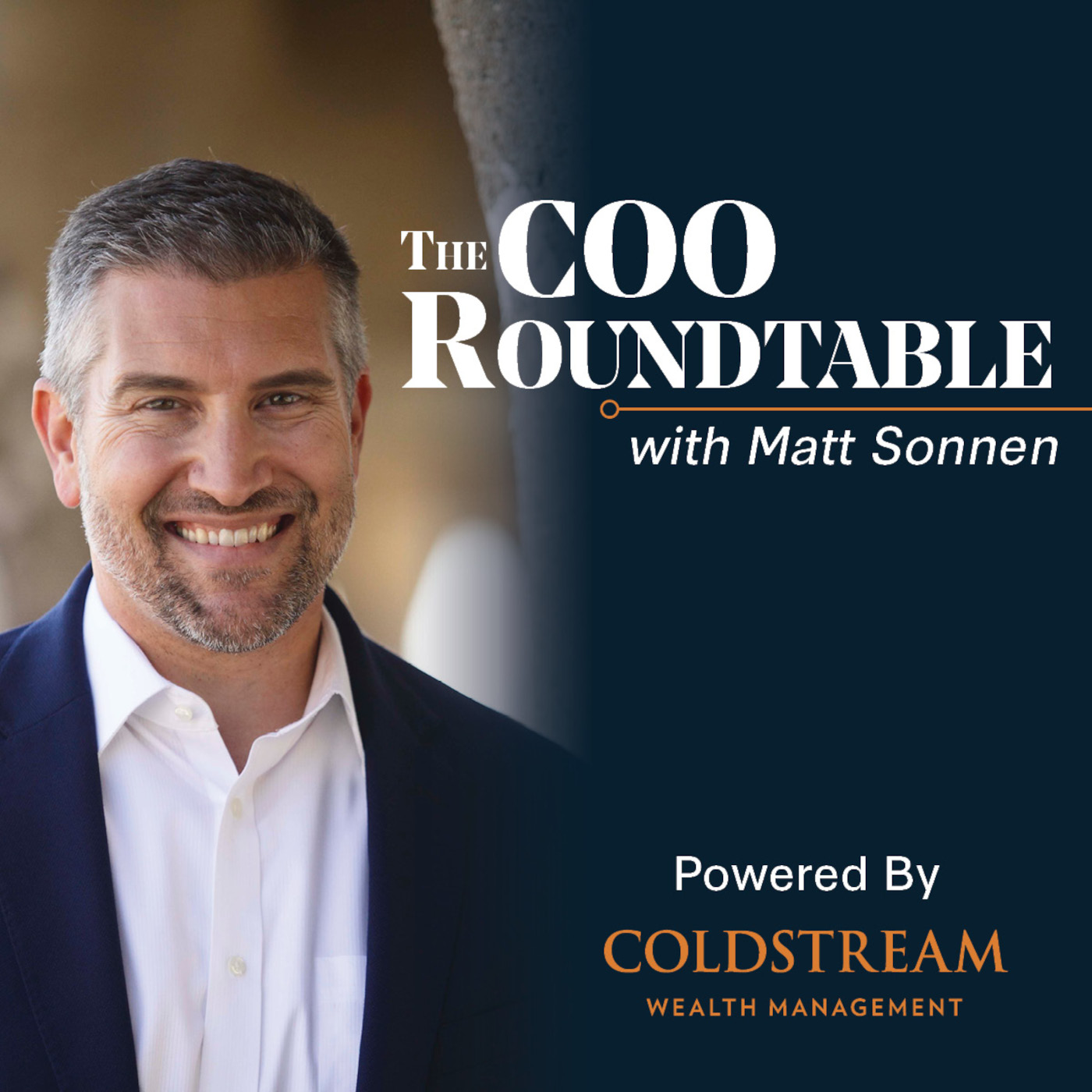
with Matt Sonnen
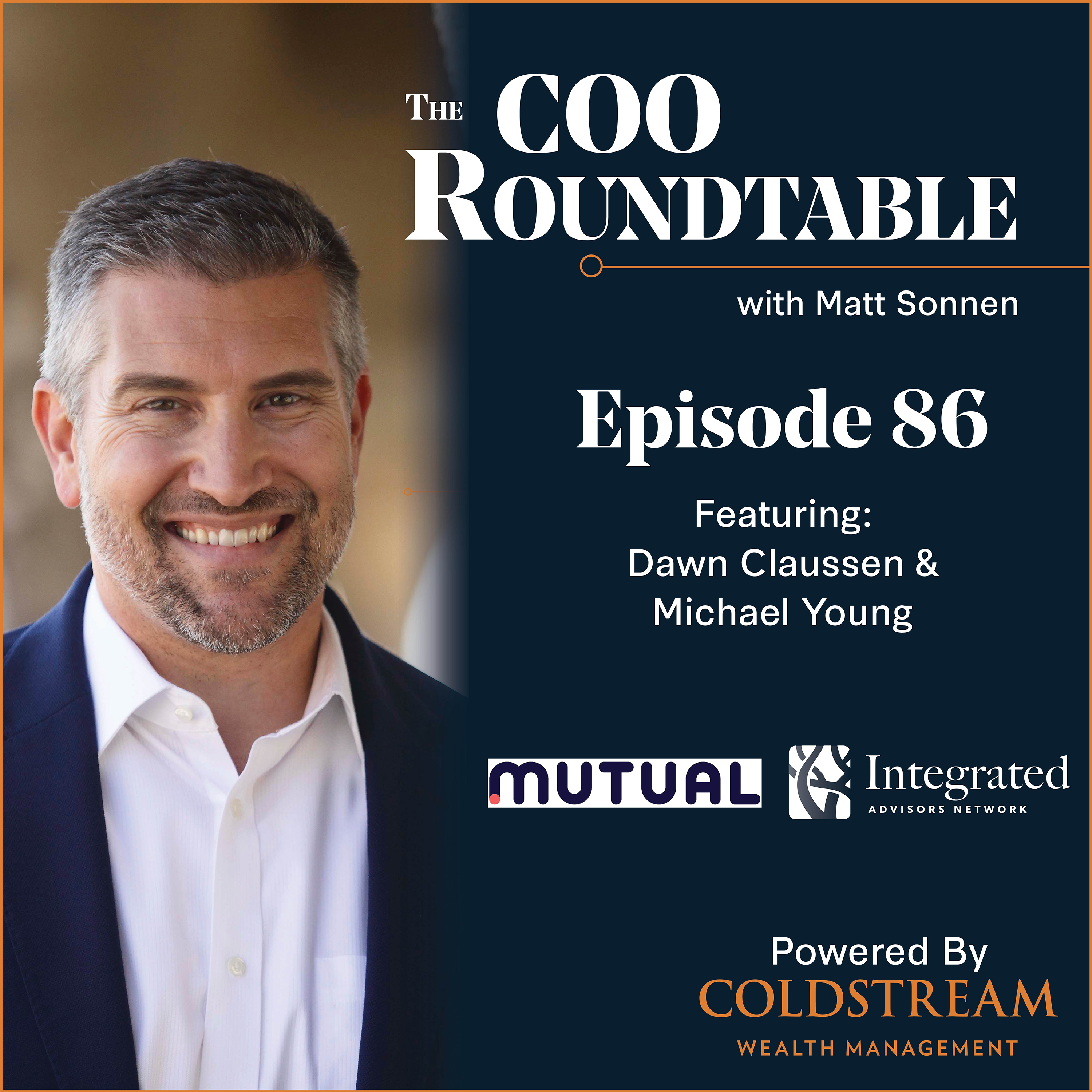
Episode 86 – Dawn Claussen & Michael Young
[00:00:00] Hi, I'm Luke Sonnen. Welcome to The COO Roundtable, powered by Coldstream Wealth Management. Here's your host, Matt Sonnen.
[00:00:15] Matt Sonnen: Welcome to Episode 86. We have two guests today running platforms that serve RIAs and not only provide technology solutions to the firms they support, but also offer intensive business coaching and strategic planning for the firms that they partner with.
[00:00:30] So both of our guests are very well positioned to tackle the topics that we dive into regularly on this podcast. First up is Dawn Claussen, COO at Mutual Group. Mutual Group was founded in 1982. Dawn joined in 2016 as the Chief Compliance Officer and moved into the COO role in 2023. I have known Mutual Group's CEO, Aaron Jasper, for many years.
[00:00:55] And he tells me all the time that every aspect of Mutual's business runs through Dawn. And that is definitely something that many of our listeners can relate to: having their hands in all aspects of the business. And you will see how much she brings to the table as we dive into today's topics. So Dawn, welcome to The COO Roundtable.
[00:01:13] Dawn Claussen: Matt, thank you so much for having me.
[00:01:16] Matt Sonnen: And joining Dawn is Michael Young, President and Managing Partner at Integrated Advisors Network. Integrated was founded in 2015 with the goal of making financial advisors' lives easier by giving them time back to focus on their clients and not get bogged down with the administrative burdens of running the firm.
[00:01:36] Michael has been with Integrated since the beginning and today he oversees everything from finance and IT to trading and technology support. Michael, I'm excited to welcome you to the podcast. Thanks for being here.
[00:01:47] Michael Young: Yeah, thanks so much for having me, Matt. I'm looking forward to our conversation today.
[00:01:51] Matt Sonnen: Great. Well, Dawn, I'll go to you first. Tell us a little bit more about Mutual Group.
[00:01:55] Dawn Claussen: Yeah, absolutely. So Mutual Group is a firm that helps power the success of independent fee-based financial advisors, primarily focusing on advisors who want to grow their business and are looking for a relationship-driven partnership.
[00:02:07] We do this through two solutions that are really designed to meet advisors where they are today and help them build toward their vision for the future, our BD solution, and our advisor affiliation solution. Across both solutions, we service approximately $15 billion in AUM. Under our advisor affiliation solution, we service 68 advisory teams affiliated with our RIA, who manage over $8 billion in assets, and under our BD solution, we engage with over 225 registered investment advisors, and frankly, for a firm that started in 1982 as a discount brokerage firm, we certainly have grown and adapted with the industry shift towards fiduciary fee-based services.
[00:02:46] For example, our RIA, which was spun off in 2013, went from having all of our advisors duly registered with our BD to having only about a third of our advisors duly registered today. And through our unique Evolve offering under our BD solution, we even help RIAs who want to transition away from commission-based solutions and focus on being fee-only advisors.
[00:03:07] Matt Sonnen: I think it really did start with - you talk about that evolution - I think it really did start with: Hey, can you be my broker dealer while I keep the fee-only assets over here, right? And then as you said, you've evolved from there.
[00:03:19] Dawn Claussen: Yep.
[00:03:20] Matt Sonnen: Yeah. That's great. Well, Michael, in your own words, tell us a little bit more about Integrated Advisors Network.
[00:03:26] Michael Young: Sure. So Integrated, as you mentioned, was founded in 2015. We are a registered investment advisor and we service, basically as an independent RIA platform, advisors that join us - join underneath our ADV part one. However, we are very involved in their independence, so much that we brand the ADV part two and customize it to their fees and services.
[00:03:50] With that, we provide full infrastructure from obviously the compliance program since it's running underneath our ADV, finTech tools, front office tools from a technology standpoint, leveraging an outsource IT group with an MSP all built inside of a Microsoft platform. And then we have an operational support staff, both from service and ops that are there to be the escalation points for our teams and then also to guide them through the independent world, leveraging the tools that we have access to.
[00:04:20] So we're here so advisors can focus on their clients and their growth, and we're in a very supportive role with that. So we are independently owned. We have built this platform with our deep operational backgrounds and our deep career backgrounds with my partners coming from both a compliance consulting world, a custody sales world, and then my world as a former equity trader and operator of firms.
[00:04:46] So we're in the business of supporting practices, not buying practices, and the advisors serve as our primary clients. We currently today service about $5 billion in AUM. We have 38 independent practices across 16 states. Typically, an advisor that fits into our model is usually between a $70 to $300 million firm that wants to join us.
[00:05:09] And then, you know, we're kind of intentional about our growth approach. We're very focused on the culture side of things. We are very methodical in the joins that we bring on into Integrated. Since we're not driven by outside investors, we're actually driven by our own return on fun versus return on investment at times.
[00:05:28] So we just take a little different tack in the way that we support teams. And actually, we have been in talks with Mutual around their Evolve program, as we do see opportunities for that in servicing some of our advisors that are transitioning from that commission side that is a piece of their book, but they want to go a hundred percent fee-based.
[00:05:45] So, glad to be here with you and Dawn.
[00:05:48] Matt Sonnen: Great. Well, Dawn, I mentioned that you joined Mutual Group in 2016, but tell us the path that led you up to that point and how your role has changed since you've joined the firm.
[00:05:59] Dawn Claussen: Yeah, definitely. I will say it's not your typical career path. I ended up getting my Bachelor's Degree from Creighton in Classical and Near Eastern Studies, or ancient Greek and Roman history, if you can believe that.
[00:06:11] Matt Sonnen: Wow.
[00:06:12] Dawn Claussen: I actually ended up starting my career in the industry in TD Ameritrade's technology support department. And it just so happened to be shortly before the crash in '08, and everything that happened around that time just fascinated me. So I never left. I eventually did leave the large call center environment for a small RIA BD in Omaha, and then over the seven years there, I moved from Assistant to COO and CCO before I left to join Mutual ten years ago. So in 2016, I started as the CCO of our RIA. Took over as Head of all Compliance in 2020, and then I stepped into the role of Chief Operating Officer in 2023.
[00:06:52] Matt Sonnen: Awesome. Well, Michael, tell us about your career experiences leading up to joining Integrated, and then all the different roles and responsibilities you've had at the firm since it launched.
[00:07:01] Michael Young: Sure. So I began here in Dallas, Texas with a regional clearing firm in 1993. So I'll put a date on myself that I've been doing this for a while. I worked every desk in the back office of this clearing firm in the first ten months of my career. So I really got exposed to how a brokerage firm worked versus how things were sold.
[00:07:23] Shortly thereafter, I moved out onto the equity trading desk, and that's where I really dug my teeth into what I wanted to become. So I was an equity trader, a NASDAQ market maker up until the mid two thousands. And during that time, you know, we traded things on the phone. We quoted things in fractions.
[00:07:42] So that's not the way that things happen today. And when fractions go away and your spreads go away, you learn how to reinvent yourself. So I joined an independent broker dealer at that time here in Dallas, and that's where I first started to see the frictions were that advisors might experience when they're going independent.
[00:08:01] So we had multiple clearing firms. We were launching an RIA in 2005 inside of that. So we're starting to see the introduction of fee-based versus commission-based product, so that really allowed me to continue to trade. We had a capital markets division and things like that, but also get into the role of supporting advisors and operating our firm.
[00:08:21] In 2011, I sold my interest in that firm, started it all over from scratch, built a broker dealer and RIA, sold all those in 2015, and then joined Jeff Groves as he was, as a consultant short inside of his compliance consulting firm with an operational background, and then he pitched the idea of Integrated, introduced me to Linda, and when we added our first advisors in July of 2015, I basically oversaw the day-to-day operating pieces of the firm, the transition of those teams, and the first implementation of the technology that we still use some of today.
[00:09:00] And through the past ten and a half years, my role has just continued to be somewhat of a plate spinner at times. We've continued to expand our team, so I've been able to delegate. That's been a fun thing to learn as kind of a serial operator, entrepreneur in this industry of trying to let things go. So that's kind of my long story.
[00:09:22] Matt Sonnen: I've heard you use that plate spinner analogy before. I love that. I need to use that more often. It's so perfect for all of our listeners: plate spinner.
[00:09:30] Michael Young: I don't know that it's necessarily a great thing to be known as - people would say that multitasking is not a good thing. But I think if you're a good critical thinker, that you're able to apply the different pieces of what you're seeing to drive the outcome. Because you can think about it from different points of view. And so that's where I think the plate spinning comes in.
[00:09:48] Matt Sonnen: Yeah, yeah. No, I don't view it as a negative at all. I love it. Well, I mentioned that both of your firms provide business coaching or strategic planning for the firms that you support. So Michael, tell us how you help entrepreneurs that you partner with define their growth strategy.
[00:10:06] Michael Young: Yeah. So as part of our discovery process and then initial transition, we're really spending time inside of their practice to understand, you know, is this an advisor that has already built an established brand, have they built a lifestyle practice that works best for them and they're really not interested in large growth strategies, and so are we here to really provide them with the tools to streamline their business so they can spend more time with their clients and more time with their families. It's really what their ideal outcome would be. And then on the other side, if we have a growth-oriented advisor, we're then really looking at our tools and how best to create workflows and take advantage of the outsourcing capabilities of our partners, be it from investment management to the technology pieces that we're aligned with.
[00:10:57] We also work closely with a couple of advisor coaches that we can make those introductions, but it really is our team digging in, understanding the service needs of that advisor, and then us pairing that with our curated group of technology solutions. And then also, our other partners that can come in and help as well.
[00:11:20] Matt Sonnen: And Dawn, I know you at the headquarters of Mutual Group, you guys are using EOS or running on EOS. How do you help your clients define their ideal client and then in EOS speak, how do you help them clarify their "three uniques?"
[00:11:36] Dawn Claussen: Yeah. So with our advisors, we certainly don't formally implement EOS, particularly because we are still in the process of implementing it ourselves.
[00:11:44] But we absolutely apply a similar mindset. First, we help advisors get very clear on who they serve best by working through their business models, service experience, and growth objectives. A lot like what Michael said his and his teams dig in with. As you know, when your ideal client isn't clear, everything downstream eventually breaks: your staffing, technology, compliance, et cetera.
[00:12:06] So, our practice management and ongoing partnership, we help advisors align their infrastructure to their ideal client. In regards to the quote unquote "three uniques": we don't outline it specifically in that way with the advisors, but we do help them uncover their differentiators through how they actually run their business, how they deliver their client experience, how they differentiate their planning or investment philosophy, and how they build operational leverage.
[00:12:30] So, while we're not teaching EOS to our advisors, we are very intentionally helping them run more focused, differentiated, and scalable businesses.
[00:12:39] Matt Sonnen: I've written about it a lot in the past. I've talked about it on stages and things. So many people confuse - they think that defining your ideal client is a marketing exercise and it's more for, oh, that's for the sales team to figure out. But it's, as you said, it's such an operational decision. You can't figure out how to structure the firm and how to structure the service offering until you know who your ideal client is. So I love that you helped them focus on that.
[00:13:07] Dawn Claussen: Yeah, exactly.
[00:13:08] Michael Young: And Matt, to add onto that, you know, that identification of that ideal client helps you really align your technology, helps you align your service model, your people, helps those advisors also understand: do they need to add somebody to their team that is going to create that client experience, because that's what you're really driving to. It's not, as you say, a marketing exercise. It really is the relationship exercise, the type of practice you're running, the type of client you're trying to attract and retain, and then build that depth of relationship to potentially handle generational wealth transfer.
[00:13:43] And building that relationship that becomes the advisor is the first call for things other than: how is my account doing? And that's really where, again, operations becomes a big piece of an advisor's world without them understanding that we're taking away from sales time or anything like that.
[00:14:02] Good operating and definition of that ideal client is very important.
[00:14:06] Matt Sonnen: I love it. Yep. Well, let's talk about one of my favorite topics, and that's the importance of documented processes, both for your businesses and for those that you're supporting.
[00:14:16] So, Michael, I know you've used Scribe to help build out many of Integrated's policies and procedures. Talk to us about how having those things written down and easily accessible for all your employees, how that's helped scale your business.
[00:14:30] Michael Young: Yeah, so as we launched Integrated, we built the firm geographically diverse. So we launched as a virtual firm basically in 2015 before the whole COVID thing sent everybody home and we learned about hybrid work.
[00:14:43] So we've - my staff and support is in a half a dozen different locations, so having kind of that - information silos needed to be broken open. So as we continue to grow and expand our team, we needed to be sure that we were documenting processes, and as we had people go on vacation, people need to know what other people were doing.
[00:15:05] And so that really - working from initially trying to do things inside of, say a OneNote, we then moved into using, as you said, Scribe. So Scribe is a AI tool that allows for us to really create good documentation that in the enterprise level is compliant, creates the right redaction, keeps things out of the machine.
[00:15:28] You know, our data is siloed, so we're making sure we have good data governance when it comes to the use of a tool like this. But it's allowed for us to really create interactive - basically clicks with good narratives through, so you're not just writing a manual that is words and bullet points and follow this stuff. You can actually show: hey, this is my workflow each morning as I'm bringing the new accounts in from the custodian into Tamarac, applying the templates, getting it assigned out to the right advisor group so they can see their new information each day in that account set. And it basically having the pictures to tell it along the way has made our desktop operating procedures much more dynamic, and I think that that is going to continue to drive efficiencies.
[00:16:14] It's going to be able to drive the ease as we bring on maybe not-as-experienced operations staff. That'll be very easy to teach what we do because we're a visually driven group now.
[00:16:28] Matt Sonnen: Training's impossible without having these things. If it's just living in people's heads, it makes training so much harder.
[00:16:34] So having these documented processes makes training of new employees so much easier. I like that. So, Dawn, tell us how your documented processes have helped Mutual Group and or the firms that you partner with. How has this documentation helped them grow more easily?
[00:16:49] Dawn Claussen: Yeah, so I mean, first I want to say that we've been leveraging more of the SharePoint environment to do that collaborative work with process documentation and Michael, I still need to pick your brain on how you guys have been enjoying Scribe because we've been starting to poke that particular bear.
[00:17:05] But, documented processes have been incredibly important for us at Mutual Group. I'll be the first to say we're not perfect and we're still very much working on getting everything documented. But we've learned that, as you grow, undocumented processes become friction points very quickly. Writing things down has helped us reduce reliance on that tribal knowledge, onboard clients more consistently, and scale without every decision flowing through a handful of people. Even partial documentation has been a meaningful difference for us.
[00:17:35] And we see the same thing with firms that we partner with. Advisors who start documenting their client workflows, service models, and operational processes are able to delegate sooner, hire more intentionally, and grow with less stress. It doesn't have to be perfect; it just has to be clear and accessible.
[00:17:50] And like us, most firms are never quite done, but every step towards clarity makes growth easier.
[00:17:57] Matt Sonnen: Yep. Well, Michael brought up the fact that they're remote, and I know, Dawn, you guys are remote too. When you can't stand up in the office and ask someone, Hey, how do I do this? You really, really need those processes written down.
[00:18:12] So, I'm curious how you both have navigated the fully remote business structure and what pros and cons you've seen with it. It's getting - more and more firms are going back to the office. So I'm curious how you guys are navigating this. Dawn, I'll go to you first. How are you handling this?
[00:18:27] Dawn Claussen: Yeah, so, much like Integrated, Mutual's been partially remote since well before COVID hit and now we're about - I'd say 70% of our workforce is remote. But one of the biggest benefits to remote workforce that we've seen is talent. We're able to hire the best people wherever they are instead of being limited by geography.
[00:18:48] For a firm like ours, that's been a meaningful advantage. The flip side, however: the biggest challenge is culture. In a remote environment, culture doesn't happen by accident and you have to be extremely intentional. There definitely isn't any water cooler bonding, and you can't rely on those hallway conversations like you said, or overhearing how work gets done.
[00:19:09] That's where the documented processes, clear expectations, and really strong communication matter. As I mentioned earlier, we're still working through documenting everything. We're not perfect, but having processes written down and accessible helps our teams move faster, onboard talent more consistently, and operate with confidence when they can't just turn to the person next to them.
[00:19:28] And I have to give credit here where credit is due. I don't think any firm reliant on remote workforce can exist without the benefit of video conferencing solutions like Teams or Zoom.
[00:19:37] Matt Sonnen: Yeah. Yep. The downside of it is just everybody says, I'm on Zoom all day; I never have time to do any work. Yeah.
[00:19:46] Well, Michael, I think you've contemplated finding office space and having your folks come into a shared space. So what are your thoughts on the remote versus in office?
[00:19:56] Michael Young: Yeah, so I'll echo a lot of what Dawn mentioned. Remote has been our approach from day one: it does lead to the ability to find talent without geographic restriction. That's definitely - the depth of Integrated's bench has benefited from that.
[00:20:15] And also, it's been interesting for us to know from a home office standpoint how some of our advisors may experience remote as well. So when you're dealing with a solo practitioner, that may be using a shared work solution just for meetings, but it's still operating their business from their home or something.
[00:20:32] We know that our tools work and that they're able to service their clients in that way. So that's an interesting little tidbit of - that I kind of thought about as we were preparing for this. Remote work creates good flexibility, but I would agree that it's very hard to build a culture passively.
[00:20:48] So we've been very intentional in our home office in the way that we have actually brought the team together for off-sites, where those are held so it is really productive and it does encourage and and foster relationship building beyond some of that work relationship. Our move towards actually having space here in Dallas in a home office setting is really kind of our own growth strategy. So it's thinking towards an advisor 2.0 for Integrated and that we do need to have some depth. We do need to have some shared resources when it comes to administrative support, some of our own service offering, and that's going to allow for us to build internal succession.
[00:21:28] It's going to build better career paths inside of our firm. That has been pretty flat in, you know, the previous ten years. So that's really kind of where we're trying to go. But we still want to be flexible with that. We do also try to engage with our advisors in person a fair bit. So not just going out and doing branch sites, but we do build an annual conference that brings everybody together from our home office team with all of our advisors, invite their staff, as well as who they want to attend.
[00:22:00] And that, again, fosters a deepening culture that even goes into the independent practices. Even though there are very different practices across our platforms, the type of clients they're servicing. We've seen study groups come out of this. We've seen partnerships being built. We've seen succession planning take place, and so even though it's not specifically remote versus in-office work, still having that connection, it really speaks to when you are bringing people together, it does foster relationships that is very different than a hundred percent remote. So, there's a lot of benefit for that. Commercial real estate leases are not necessarily my idea of fun, but I think having a shared space that we build to where we can have home office visits, we can work with vendors a little differently, I think it's going to be good.
[00:22:50] Matt Sonnen: Yeah, I like the thinking. So we touched on it a little bit earlier. One of the things I love talking about is this tension between sales teams and operations teams. Traditionally, sales teams have been seen as the primary driver of revenue at RIAs, and then the poor operations team often gets relegated to the quote "back office," and are often viewed as a necessary expense rather than a strategic partner in the business, as we've been talking about.
[00:23:18] So, Michael, what are your thoughts on this sales versus operations conflict that seems to just never die?
[00:23:25] Michael Young: Yeah. So I would say that focus on sales or revenue without operations creates chaos.
[00:23:32] Matt Sonnen: Yeah.
[00:23:33] Michael Young: But operations without growth - so operations without sales - you just get stagnation. So you do have to really approach it that they're partners and not opponents.
[00:23:43] And since we're a service-oriented firm, it's really easy for us on the front end to involve operations in the conversation with sales. So our business development approach really does look at the due diligence side of the operating pieces of the advisors that are looking to join us. And then, you know, you're able to have, kind of, sales understanding that operations - it was really there to protect the client experience and it's to protect the advisor's experience. So it's to make their sales process really sticky. And if you have an operations team that understands the sales process and that they are the value prop that you're out pitching in the sales process, it helps increase enterprise value because they then take ownership and pride in being part of that process.
[00:24:30] So I think there's a win-win from both sides.
[00:24:33] Matt Sonnen: Yeah, it does need to be a partnership. So Dawn, what's your take on the us versus them battle that unfortunately goes on in our industry?
[00:24:43] Dawn Claussen: Yeah, I mean, I want to echo pretty much everything that Michael said. I've always struggled with the sales versus operations framing because in a healthy firm, there really isn't an us and them.
[00:24:53] We're working toward the same outcome: strong long-term client relationships and a sustainable business. What I found more helpful is thinking about who is the primary player at different points in the client lifecycle. Early on, sales is clearly in the lead, bringing in the right clients and setting expectations.
[00:25:08] Operations is really just there to support that momentum with a smooth onboarding and a strong first experience. Once the client is onboarded, that dynamic shifts. Operations becomes the primary driver of retention while sales continues to support growth by bringing in new opportunities. Both functions are absolutely essential and neither succeeds without the other.
[00:25:28] When firms treat operations as a strategic partner instead of back office cost center, everything works better. Your teams are more aligned, and growth becomes more intentional. In my experience, the real win is alignment, not picking sides.
[00:25:42] Matt Sonnen: Yeah, that's great. Well, something we have to talk about. It's not one of my favorite topics, only because I feel like it's completely overblown at this point, but we, on this podcast, we have to talk AI.
[00:25:53] There is ever an aspect of our industry that is dominated by FOMO, it is AI. I get emails constantly from our employees at Coldstream saying, you know, we're behind every other firm and we're not doing enough. So Dawn, do you think RIAs should build their own AI tools and build their own AI agents?
[00:26:12] Or should this be something that they should just rely on the AI tools that are embedded in the various vendors that are making up their tech stack?
[00:26:22] Dawn Claussen: Yeah, so I actually love this topic. I think this is one of those areas, though, where the industry definitely gets caught up in FOMO very quickly.
[00:26:30] Michael Young: Mm-hmm.
[00:26:31] Dawn Claussen: The question of whether to build or buy AI tools really comes down to expertise, need, and focus. Building and maintaining AI agents takes time, governance, and ongoing effort. And frankly, for most RIAs, that can become a distraction from serving clients and growing the business. In most cases, I believe advisors are better served leveraging the AI that's embedded in the vendors that make up their tech stack, where the tooling, security, and compliance guardrails are already being thoughtfully developed. That allows firms to benefit from AI without having to become AI experts themselves.
[00:27:02] I also think it's important to separate AI from automation. They're related, but not the same. A lot of what advisors actually need today is better automation, cleaner workflows, fewer manual handoffs, more consistency. AI can enhance that, but it doesn't replace the fundamentals.
[00:27:18] So for me, it's not build versus buy as a philosophy. It's being honest about where your firm creates the most value. For most RIAs, that's not in building AI tools, it's in applying technology intentionally to support people, process, and the client experience.
[00:27:34] Matt Sonnen: Yeah, I love everything you said. I think too many people - I mean, the AI industry, I guess, has done a great sales job. Too many people think it's just a, you know, turn it on or turn it off, turn it on, or turn it. They're not thinking about how to actually make it work well, and work with your data, and all of the - like you mentioned - the work and the workflows and everything else that you need to build. It's just: Hey, we need to turn it on, because I heard this other firm turned it on and, you know, everybody has all these numbers now thrown out. Oh, it's going to save me eight hours a week. I'm, you know, a whole day - I'll get a whole day back if we turn it on, but it's going to take months of planning and prep just to get it to do some basic functions.
[00:28:13] Dawn Claussen: Yeah. It's honestly - the best term I've heard is garbage in, garbage out.
[00:28:17] Matt Sonnen: Yeah, I think that's right. So, Michael, where do you stand on this? Are RIAs equipped to build the tools themselves? Or should they leave it to the larger tech companies, the larger vendors out there and hope that they're going to roll out tools that will be useful to the RIA?
[00:28:34] Michael Young: I'm sure that there are some firms somewhere that have the technology staff, the CTO, the coders, the people that understand it, that maybe can build something that might be agentic or leverage some type of agent. Integrated's not one of those firms, and I think probably most firms should be spending their time focused on their client and not on engineering.
[00:28:57] So I think that's where your energy should be spent, and that's why FinTech companies exist. It's why technology companies drive the valuations they drive today is because those people are the experts in it. I think what RIAs need to consider as they're looking at it is obviously the data. What has access to your data?
[00:29:18] How is it being protected? So doing your diligence, having your proper data governance in place ahead of time, and understanding that the tools that you're looking to deploy is going to potentially just remove friction, not replace the judgment of the advisor. I think - I mean, we are a firm that is a utilizer of Copilot internally: you know, we live in that world of the Microsoft tools, like Dawn mentioned earlier, we're a big user of SharePoint. I think that that is a good tool to create some workflow automation and to help with some of the more data crunching things that we may be doing in the background.
[00:30:01] I recently attended just the virtual side, but I had a team member in the audience at the Nitrogen Fearless Investing Conference a few weeks back and the things that a firm like that is doing to create client engagement and to improve advisor time and so forth - that is, again, agentic that is living inside of their ecosystem, that it's not going out to the LLMs and exposing any data to the large machines. I think that those type of tools are what we're looking for.
[00:30:32] I'm excited to see where our industry goes with it, but I'm patient about it. I'm not one of these people that - I understand that AI is going to move faster than any of us think it's going to, but I think it's also, to use your words - garbage in, garbage out is going to drive, you know, maybe a larger print at the bottom of the screen that's going, yeah, AI might not be always correct, to double check our work.
[00:30:55] You know, that might need to be the biggest disclosure that's out there. So, I like the thought of having our tech partners investing in it and kind of bringing me the solution to vet on my own after that. Yeah.
[00:31:08] Matt Sonnen: Yeah, I had a AI consultant point out to me that, you know, everybody's so hung up on that eight hours or whatever the, you know, the numbers are.
[00:31:17] I'm going to use it to save me time. It's going to save me time. Well, in the beginning, and it's in the beginning as you learn it, and it works with your data, but also just where we are with AI, the tools aren't as sophisticated as they will be very soon, but it's actually going to slow you down.
[00:31:33] Because like you said, you have to verify the data, you have to play around with the prompts you're giving it. No, that wasn't exactly the answer that I was looking for. And you're working, you know, figuring out how to do your prompts better so it actually, in the early days is going to slow you down rather than speed you up.
[00:31:47] And I think everybody, again, just thinks once I flip the switch, my eight hours just magically lands in my lap.
[00:31:53] Michael Young: Right.
[00:31:55] Matt Sonnen: So Michael, as we get further into this world, what are some use cases that you've seen or that you're excited about? How should RIAs be leveraging AI?
[00:32:04] Michael Young: So, kind of circling back into what Nitrogen is rolling out - yeah - their nucleus piece. I think that that is very intriguing as far as helping advisors really parse through data. So, it used to be when you're using that system, getting outside holdings and accounts that were held away through statements and so forth, there was a lot of manual data entry and now the tool can read it, you know, so it's - there's a good machine learning there.
[00:32:31] It can see what is a bond, it can see what is a stock. It can really help you start to build a proposal. It's really conversant. You know, it's still in beta. We literally just turned it on last week here inside of the firm for a couple of our users. So we're still learning. So I think that's a place again, in preparation, helping an advisor really put together the pieces for a proposal.
[00:32:54] But not necessarily doing the investment work, you know, it's not going out and doing the research and proposing a portfolio or anything like that. I think that that's still, again, removing friction, looking, does not replace the judgment that an advisor needs to have. I mean, we are fiduciaries, we are responsible for it.
[00:33:11] Also, some of the meeting tools, I think, you know, not necessarily just a note taker, not somebody that's, you know, sitting there and just gives you a summary. I think that there are some interesting things coming that help you like prepare for a meeting well, by taking prior conversations, taking prior emails, bringing it together, putting your performance report in there from Tamarac, and taking a look at what you're going to prepare for your meeting, and then sitting with you in the meeting and helping you keep on pace, but it also kind of listening to maybe prompt you to something that your client may have said either in the meeting so you can circle back and look at a place that a client has really brought up a need or a want or deeper explanation, but then also have very pointed follow-up afterwards. So it's, again, it's going to be able to summarize the meeting, not necessarily give you a transcript and help you remember those salient points.
[00:34:12] So it's like a super memory sitting beside you in a meeting. I think things like that will really drive a client engagement experience and, again, maybe get some hours, some of those eight hours back in preparation for that meeting to help advisors be able to be client-focused and, you know, let the workflow and the ops team do the other things.
[00:34:34] Matt Sonnen: Yeah, I like it. And Dawn, I know you've built quite a few AI resources both for Mutual Group and the RIAs partnering with you. So talk to us a little bit about that.
[00:34:44] Dawn Claussen: Yeah, so I mean, I want to be very clear upfront. We've really only started to scratch the surface with AI, both internally and with the advisors we support.
[00:34:53] We're being very intentional about not over rotating into hype. And so where we started wasn't with building fancy agents or anything like that. It was with fundamentals, helping advisors understand the acceptable use, the data security, and where AI fits responsibly inside our regulated environment.
[00:35:10] That groundwork matters a lot more than I think people realize. Internally, we have rolled out a secure AI portal that allows our people to experiment safely and we are preparing to make that available to our advisors. And this is where we're building, like, what I'll call helper or generative agents designed to do more support, efficiency, and knowledge access - just query different things. But at the same time, we believe in curating best-in-class technology, which is why we've also made powerful AI note taking solutions to what Michael was referring to, like Zocks, Jump, and Vega Minds available to our advisors. Both efforts are focused on the practical application and not just the abstract decision making or client-facing advice aspects.
[00:35:55] So in addition, we are currently upgrading our environment so we can start exploring more agentic AI use cases over time, but always with the governance and purpose-first mindset. For us, AI isn't about replacing people, it's about reducing friction, supporting process, and helping advisors focus more time on clients and strategy.
[00:36:15] So what I'd say is we're being very deliberate. Start with education and guardrails. Build the confidence, and then expand the capability, rather than chasing FOMO and creating unnecessary risk or distraction for us or our advisors.
[00:36:29] Matt Sonnen: Great. I love it. Well, Dawn and Michael, thank you so much for joining us today, for being so open and generous with your insights.
[00:36:37] You've shared a ton of valuable wisdom, I know our listeners are walking away with so much to think about. So thank you both for being here.
[00:36:45] Dawn Claussen: Yeah, thank you for having us.
[00:36:46] Michael Young: Yeah, thanks so much.
[00:36:48] Matt Sonnen: Well, that is a wrap for Episode 86. Thanks for tuning in, and we will talk to you all soon.
© Coldstream. All rights reserved. May not be reproduced, republished, or distributed without prior written consent. Information drawn from third-party sources believed to be reliable but not guaranteed as to accuracy, timeliness, or completeness. None of the information provided constitutes an opinion or a recommendation or a solicitation of an offer to buy or sell any particular security. Coldstream analyses are not intended to provide, and should not be construed to constitute, complete accounting, insurance, legal, or tax advice. The investment strategies and securities shown may not be suitable to you. Past performance is no guarantee of future results.